September 18, 2026
Gun Talk Staff
The opinion opens with a real example that makes its point better than any legal citation could: an 18-year-old who represented the United States at the Tokyo Olympics in 2020, shooting skeet. Under existing federal law, it would have been a felony for a licensed dealer to sell that same 18-year-old a handgun, either before she left for Tokyo or after she came home to college at the University of Texas at Arlington.
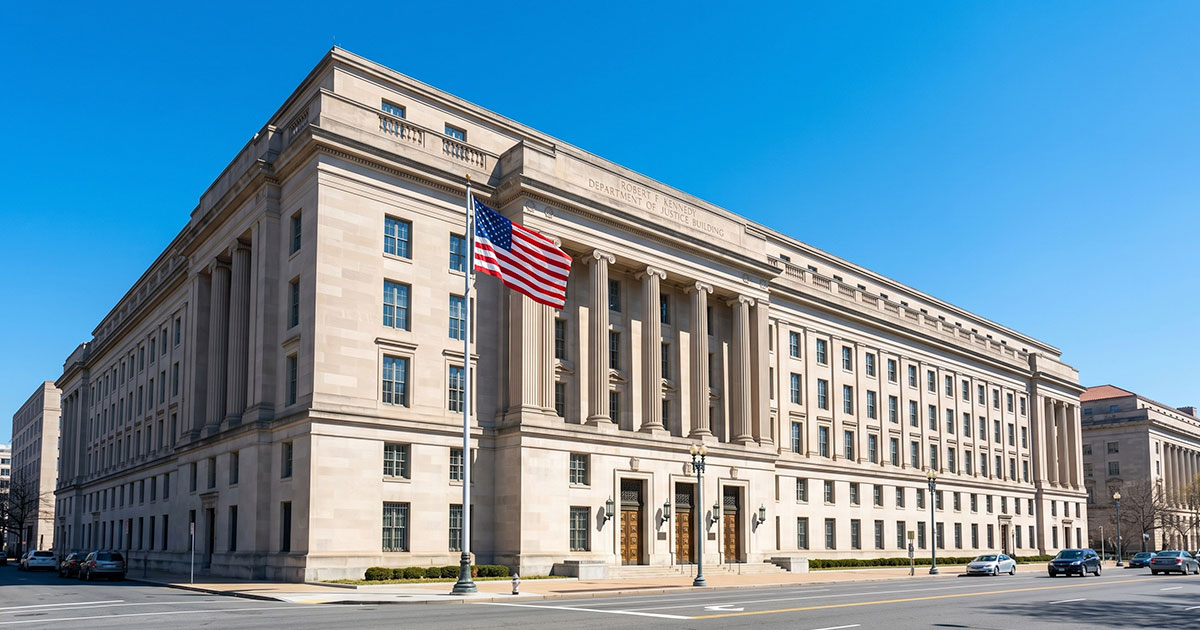
The opinion is formally titled a “Memorandum Opinion for the Attorney General” — meaning it's written directly to and for AG Todd Blanche, and the document itself opens by saying “you have asked” whether the restriction could still be enforced. Blanche is the one who put the question to OLC in the first place.
Blanche has been Attorney General since April 2026, confirmed by the Senate in August after serving as Acting AG and, before that, as Deputy Attorney General under Pam Bondi starting in March 2025. Before joining DOJ leadership, he spent years as a federal prosecutor in the Southern District of New York and later worked as a defense attorney, most notably representing President Trump in several of his criminal cases. According to Bearing Arms' reporting, Blanche's request to OLC likely came in response to the ongoing circuit split on this exact question — including a Firearms Policy Coalition case in the Fifth Circuit, which is almost certainly the Reese v. ATF decision the opinion itself relies on. In other words: Blanche saw the courts already fighting over this, and asked his own Office of Legal Counsel to settle where DOJ stands.
“Our laws deem an eighteen-year-old ‘mature enough to be drafted, vote, serve as a juror, and be sentenced to death.’” — DOJ Office of Legal Counsel opinion, September 17, 2026
Since the Gun Control Act of 1968, federal law has drawn a line that a lot of gun owners don't realize exists: an 18-to-20-year-old could always walk into a gun store and legally buy a rifle or a shotgun. What they couldn't legally buy from a licensed dealer was a handgun. That's specifically what 18 U.S.C. § 922(b)(1) and (c)(1) restrict — not firearms generally, just handguns, and just from licensed dealers. A dealer who knowingly sold a handgun to someone in that age bracket faced losing their federal license and up to five years in prison.
The workaround has always existed at the margins: an 18-to-20-year-old could receive a handgun as a gift, buy one in a private sale where state law allowed it, or have a parent purchase one for them. But the primary market — walking into a licensed dealer and buying a handgun yourself — has been closed to that age group for 58 years.
The opinion applies the two-step framework the Supreme Court laid out in Bruen (2022) and refined this year in Wolford v. Lopez: first, does the Second Amendment's text cover the conduct at all? If yes, the government has to show the restriction matches America's historical tradition of firearm regulation. If it can't, the restriction doesn't survive.
On the first question, OLC concludes 18-to-20-year-olds are unambiguously part of “the people” the Second Amendment protects. The opinion leans heavily on Founding-era militia law — the Militia Act of 1792 required every free man 18 and older to arm himself, and 249 of the roughly 250 militia statutes passed by the states before and after ratification set the service age at 18, not 21. It also points to the Twenty-Sixth Amendment, which set the voting age at 18 in 1971, as constitutional confirmation that 18-year-olds are full members of the political community today.
On the second question — whether history supports today's restriction — the opinion says no. It walks through the strongest historical arguments for the ban and rejects each one: the old common-law rule that let minors void contracts wasn't about guns and didn't ban anything, it just gave minors an out; the wave of state laws from the 1850s onward mostly targeted “minors” as a legal status (which today means under 18, not under 21) and came too late to establish a Founding-era tradition anyway; and college conduct codes and constable-eligibility rules were about school discipline and public office, not a general right to buy a gun.
“Section 922(b)(1) and (c)(1) may not be enforced to impose criminal penalties on dealers who sell handguns to a class of law-abiding adults who, in nearly every other relevant respect, are members of the political community.” — DOJ Office of Legal Counsel opinion, September 17, 2026
The opinion is careful and narrow about its own limits, and that's worth knowing before anyone assumes more changed than actually did:
OLC isn't writing on a blank slate here, and the opinion says so directly. Federal appeals courts have split hard on this exact question. The Fifth Circuit, in Reese v. ATF (2025), already found the same restriction unconstitutional. The Fourth Circuit (McCoy) and the Eleventh Circuit sitting en banc (NRA v. Bondi) went the other way and upheld it. The Tenth Circuit upheld Colorado's version of the same idea. OLC's opinion sides squarely with the Fifth Circuit and explains, court by court, why it thinks the other circuits' reasoning doesn't hold up under the Supreme Court's most recent Second Amendment decisions.
That circuit split means this issue was already very likely headed for the Supreme Court regardless of what OLC concluded. What today's opinion does is commit the executive branch to one side of that fight while it continues.
DOJ announced the opinion itself on September 18 with a straightforward post: the department had concluded the federal ban on handgun sales to 18-to-20-year-olds is unconstitutional and cannot be criminally enforced. The reaction split along predictable lines. Gun rights advocates and Second Amendment attorneys called it overdue, with plenty pointing out the same thing this piece has: it's strange that an 18-year-old can be drafted, vote, and sit on a jury but couldn't legally buy a handgun. On the other side, GIFFORDS Executive Director Emma Brown called it “yet another illegal and dangerous action by the Trump administration to please their gun lobby CEO donors.” Expect that fight to continue in the courts regardless of what OLC concluded.
For the first time since the Gun Control Act of 1968, the Justice Department's own legal position is that an 18-year-old should be able to walk into a licensed dealer and buy a handgun the same way they've always been able to buy a rifle or a shotgun. The opinion's core argument is hard to shake once you sit with it: this country already trusts 18-year-olds to be drafted, to vote, to sit on juries, and to face the death penalty as adults. Explaining why a handgun purchase should be the one place that logic stops has never had a clean answer, and this opinion is the government's most detailed attempt yet to say so in writing.
It's not the last word — the circuit split guarantees more litigation, and this is exactly the kind of question the Supreme Court eventually resolves for everyone. But as of today, the federal government's own lawyers have gone on record: the ban doesn't hold up.
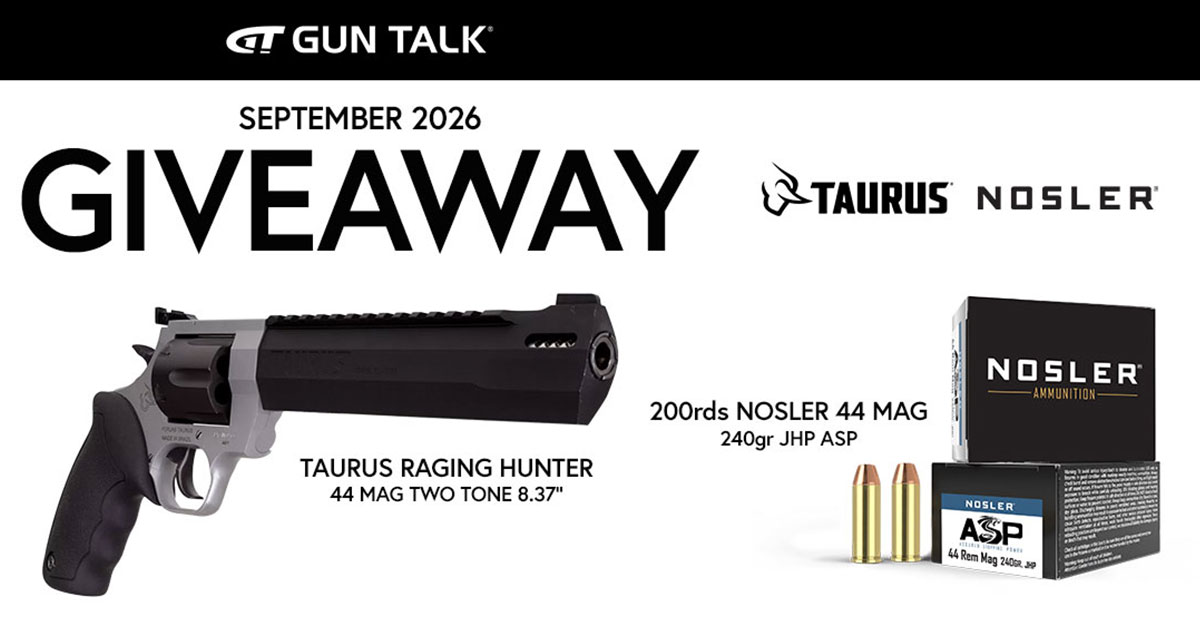
Gun Talk Giveaway
One lucky winner will bring home:
Open to U.S. residents 21+ only. Void where prohibited.