August 19, 2026
Gun Talk Staff
We've spent a lot of column space this year on courts finally telling federal agencies they can't write regulations so vague that a law-abiding citizen has no way to know if he's a felon. The NFA fight has dominated that conversation all summer. Now the ghost gun rule joins the list.
On August 18, a federal judge sided with the Second Amendment Foundation and Defense Distributed and struck down the ATF's Frame or Receiver Rule — the Biden-era regulation that redefined what counts as a "firearm" to sweep in unfinished frames, receivers, and the parts kits that go with them. The court didn't just say the rule went too far. It said the rule was so poorly written that nobody — not you, not your local gun shop, not the ATF's own agents — could reliably tell where "hunk of plastic" ended and "firearm" began.
That's the headline. Here's everything underneath it, including the part that matters most: exactly who this protects right now.
Back in April 2022, the Biden ATF published a rule that rewrote the regulatory definition of "firearm" under the Gun Control Act. Before that rule, an unfinished 80% lower or a raw frame wasn't a firearm under federal law — it hadn't been drilled, milled, or otherwise finished to the point of actually being able to fire anything. Buy one, finish it in your garage, no background check, no serial number, no paperwork. That's been legal in this country for decades and it's a real tradition, not a loophole somebody invented to dodge the system.
The 2022 rule changed the test. Instead of asking whether something currently functioned as a frame or receiver, the ATF built a new standard around whether a piece of material "may readily be completed, assembled, restored, or otherwise converted" into one. That is about as squishy a legal standard as you'll find anywhere in federal regulation, and it put the ATF in the position of deciding, case by case and often after the fact, whether your unfinished chunk of polymer had crossed some invisible line into felony territory.
Yes, and this is the part you need to understand before you get too excited or too confused by what happened this week. In March 2025, the Supreme Court ruled 7-2 in the earlier stage of this same litigation — then styled Bondi v. VanDerStok — and upheld the rule. But that ruling answered a narrower question than most people remember: whether the ATF's rule was consistent with the statutory text of the Gun Control Act. Justice Gorsuch, writing for the majority, essentially said Congress gave the ATF room to regulate at least some parts kits, so the rule wasn't facially inconsistent with the statute.
What the Supreme Court did not fully resolve was whether the rule, as written and as applied, violated the Second Amendment or the Due Process Clause — the "you can't criminalize something without telling people clearly what's illegal" principle that's supposed to protect everybody regardless of what the underlying law regulates. That's exactly the gap this week's ruling stepped into. Same underlying rule, different constitutional question, different court, different result — because it's genuinely a different legal argument than the one SCOTUS already decided.
The opinion is blunt about the rule's core problem: the "readily converted" standard left the actual determination of when something becomes a firearm up to the ATF's own subjective judgment, with no fair notice to the person holding the piece of plastic in his hands. In the court's own words, the rule "does not provide fair notice to the reader about when a component becomes subject to enforcement." That's a due process problem in its purest form — a law that even a careful, good-faith citizen can't parse in advance.
“This rule was such a mess that it not only violated the Second Amendment but was so terribly drafted that it managed to be ruled unconstitutionally vague.” — Adam Kraut, SAF Executive Director
SAF founder Alan Gottlieb put the practical stakes even more plainly: under the old rule, owning a piece of plastic that could theoretically someday become a firearm was enough to make an otherwise law-abiding citizen a criminal. Congress writes the definitions in the Gun Control Act. The ATF doesn't get to quietly rewrite them to chase a political goal, no matter how well-intentioned. And notably, Gottlieb's read on the ruling goes further than just striking the rule — he's characterizing it as an affirmation that Americans can still build firearms in their own homes without fear of prosecution, at least for the parties this injunction covers.
If you've been reading our NFA coverage this summer, this next part is going to sound familiar — because it's the same legal mechanics playing out in a different case. This is not a nationwide injunction. It is a party-specific injunction, and the difference between those two things is the difference between "this protects me" and "this protects someone else."
| Defense Distributed | COVERED. Named plaintiff in the case. |
|---|---|
| Current SAF members | COVERED. The injunction explicitly protects current Second Amendment Foundation members. |
| Future SAF members | COVERED. The court's order extends to future members too — joining SAF going forward brings you under the injunction's protection. |
| The specific kits at issue in the case | COVERED. The injunction is tied to the particular gun kits litigated in this case, not every conceivable frame or receiver product on the market. |
| Everyone else | NOT COVERED. If you are not a Defense Distributed customer or an SAF member, the Frame or Receiver Rule remains in effect for you as far as this ruling is concerned. The ATF can still enforce it against non-covered parties. |
That last row is the one we want to make sure lands. This ruling is a genuine, significant legal win. It is not a national repeal of the ghost gun rule, and it is not a green light for anybody, anywhere, to start finishing 80% lowers without a second thought. If you want the protection this injunction offers, the practical path is straightforward: join SAF. That's not a sales pitch, that's literally how the court structured the coverage.
Zoom out for a second. This ruling lands the same month we've been covering the Silencer Shop Foundation NFA injunction, the same summer the Third Circuit struck New Jersey's assault weapons ban, the same year the NFA tax went to zero and suppressor sales exploded. There's a throughline here that's bigger than any single case: federal firearms regulations written broadly, vaguely, or aggressively during the Biden years are having a genuinely rough stretch in federal court, and the legal theories doing the damage aren't always the flashy Second Amendment arguments — sometimes it's the boring-sounding due process and vagueness arguments that do the most work, because a rule nobody can actually understand is a rule that's hard for any court to defend, regardless of the underlying policy debate.
The party-specific injunction pattern is also becoming the signature move of 2026 gun rights litigation. Win in court, get a ruling that covers your named plaintiffs and your membership organization's members, and let the practical pressure of "join to get covered" do the rest of the work while the case works its way toward a broader resolution or a legislative fix. It's not as satisfying as a sweeping nationwide strike-down. It is, however, effective, and it's the legal environment gun owners need to understand in 2026 — not just this ruling, but the mechanism behind it.
Expect the government to weigh its options the same way it's weighing them in the NFA litigation right now: appeal to the Fifth Circuit, let the clock run, or decline to pursue it further. Given that the Fifth Circuit has already shown itself willing to rule against this exact rule once before — it was a Fifth Circuit panel that originally struck the rule down before the Supreme Court took up the statutory question — an appeal doesn't obviously favor the government's position. Watch for DOJ's next move, and watch for whether SAF or other organizations use this ruling as a template to bring similar as-applied challenges on behalf of their own members in other circuits.
If you want the most current word directly from the people who litigated it, SAF's own release is the primary source, and it's worth reading in full.
This is a real win, and it's a well-earned one. A regulation that couldn't even tell a careful, law-abiding citizen when he'd crossed into felony territory never should have survived this long, and a federal court just said so in plain terms. But the win belongs, for right now, to Defense Distributed and to Second Amendment Foundation members — current and future. If you've been sitting on an SAF membership decision, this is about as concrete a reason as you're going to get. And if you're not a covered party, treat the underlying Frame or Receiver Rule as still in effect for you until a court, an agency, or Congress says otherwise for everybody.
We'll keep watching this one the same way we've been watching the NFA fight all summer — because it's the same fight, really, just fought on different legal ground. Federal agencies wrote a lot of vague, aggressive rules in the last administration. Courts in 2026 are taking them apart one vagueness challenge at a time.
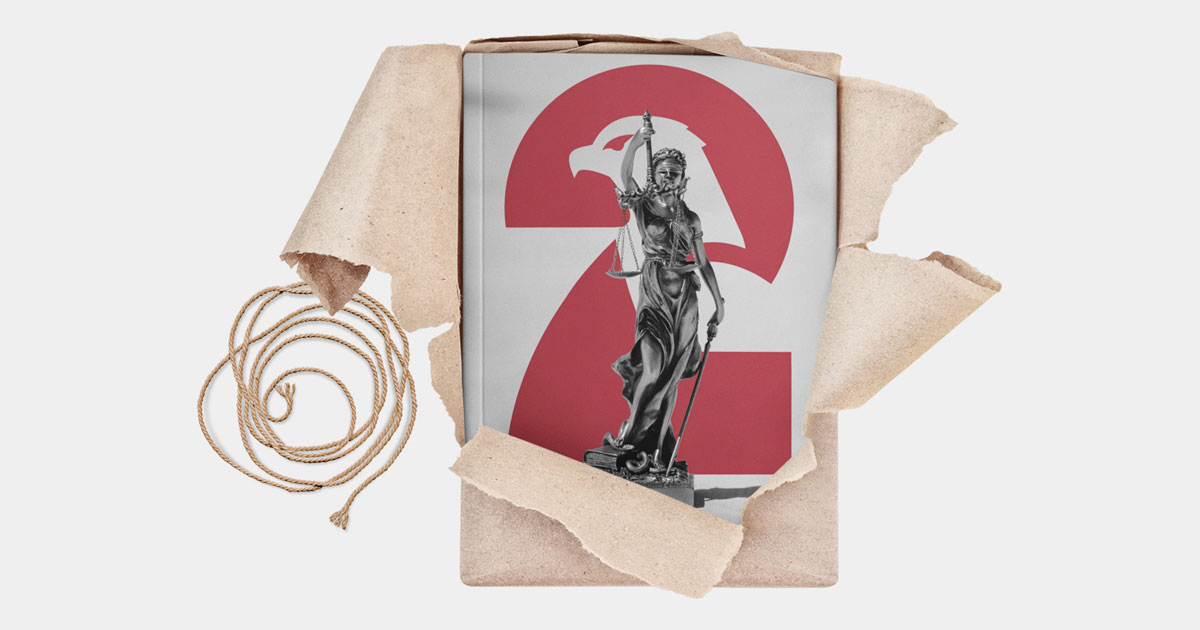
Graphic courtesy of the Second Amendment Foundation.



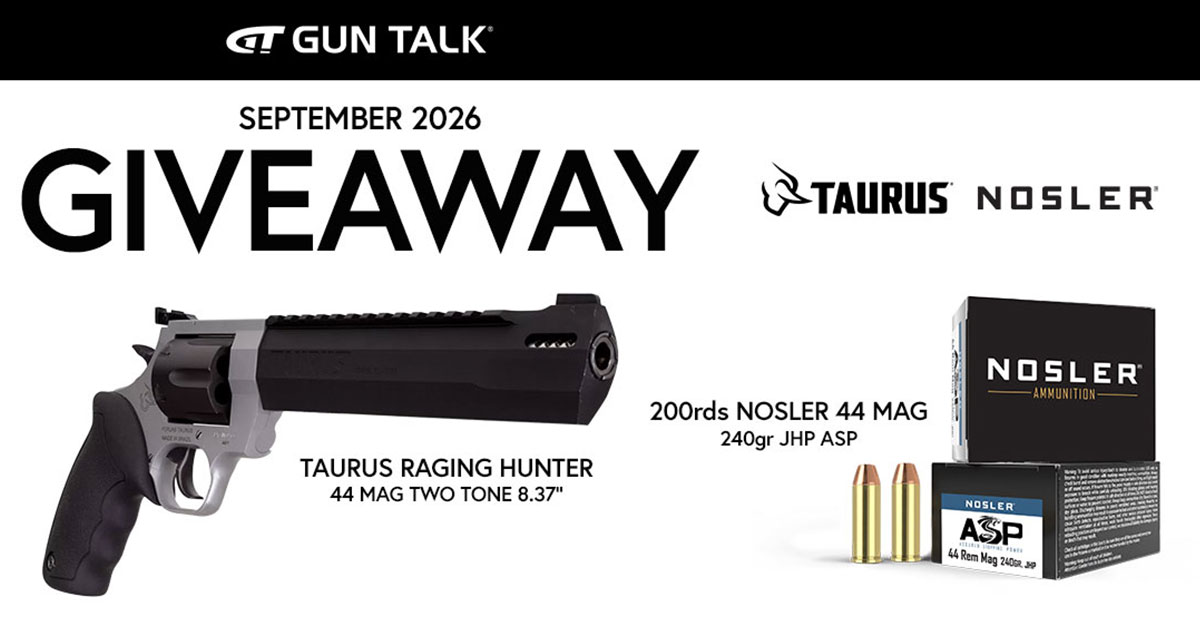
Gun Talk Giveaway
One lucky winner will bring home:
Open to U.S. residents 21+ only. Void where prohibited.