July 28, 2026
Gun Talk Staff
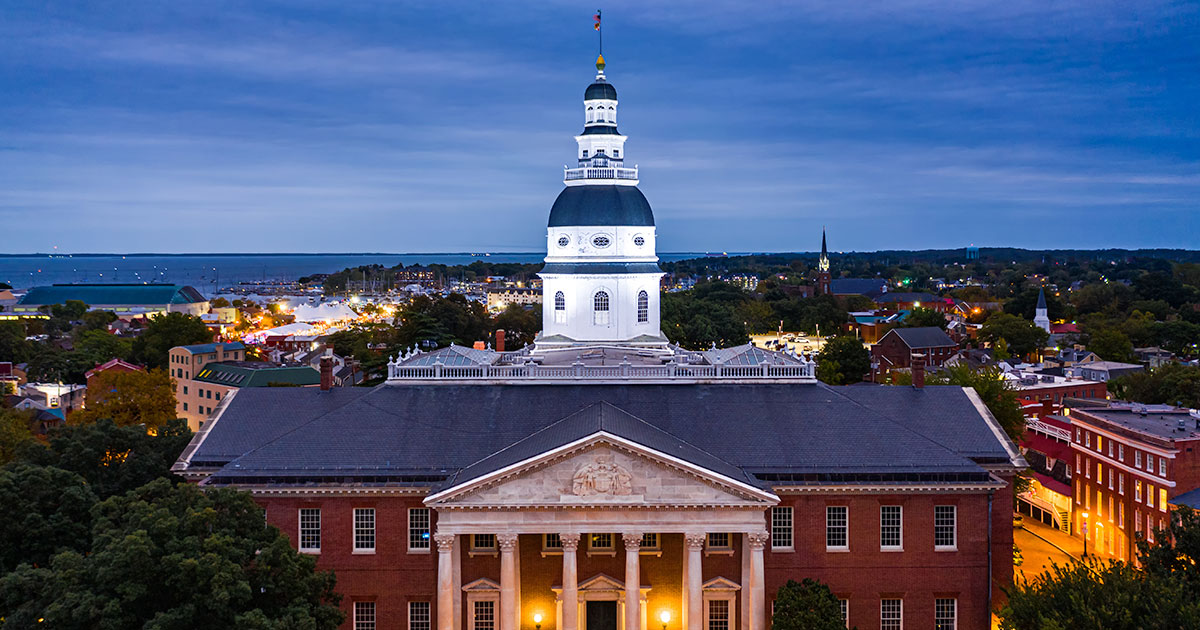
There’s a phrase that gets thrown around a lot in Second Amendment debates that usually functions as a rhetorical shield: “nobody’s coming for your guns.” Maryland Governor Wes Moore signed SB 334 on May 26, 2026. The bill — marketed as the “Stop DIY Machine Guns Act” — defines a new category of firearm called a “machine gun convertible pistol” and bans its sale, purchase, manufacture, and transfer in the state. The category, as written, covers every Glock handgun ever made.
Every. Glock. Ever. Made.
The Glock 19 is the most-carried duty and concealed carry pistol in the United States. The G17 is standard issue for more law enforcement agencies than any other handgun. The G26 is one of the most popular compact carry guns in America. All of them have a cruciform trigger bar. All of them are now banned from sale and transfer in Maryland as of January 1, 2027, under SB 334. If FPC President Brandon Combs is right that “if Maryland’s ban is allowed to stand, it could be extended to prohibit virtually every semiautomatic firearm,” then Maryland just built the template for the most expansive handgun ban in American history.
NRA, SAF, and FPC filed suit the same day Moore signed the bill. They filed a preliminary injunction motion on July 20. And they are confident, based on recent legal precedent, that this one should not be a close call.
“Anti-gun politicians will constantly tell you that ‘no one is coming for your guns.’ And then they pass bills like this that ban the most commonly owned handgun in America. Both can’t be true.” — Bill Sack, SAF Senior Director of Legal Operations
The marketing around this bill is worth examining before we get to the legal substance, because it’s a good example of how legislation can describe itself in terms that sound narrow and technical while covering something very broad.
The bill is called the “Stop DIY Machine Guns Act.” That name implies a targeted response to a specific problem: people illegally converting semiautomatic pistols into fully automatic machine guns using aftermarket devices — often called “giggle switches,” Glock switches, or auto sears — that replace the pistol’s backplate and bypass the trigger mechanism. This conversion is already a federal felony under the National Firearms Act and carries mandatory minimum prison sentences. The problem the bill purports to solve is already illegal.
What the bill does instead of targeting the illegal conversion is target the legal firearm. SB 334 defines a “machine gun convertible pistol” as any semiautomatic pistol that contains a cruciform trigger bar — meaning a trigger bar shaped like a cross in cross-section. Glocks have cruciform trigger bars. This is a fundamental design element of the Glock action that has been present in every Glock pistol since the G17 was introduced in 1982. It is not an accessory. It cannot be removed without replacing the entire fire control group with a different design. A Glock without a cruciform trigger bar is not a Glock.
So what SB 334 actually does, in plain English, is ban Glocks. The “DIY machine gun” framing is the political cover for a law that bans the most popular handgun family in the United States based on an internal design element that the gun has carried for 44 years.
The Second Amendment community has been in court constantly since Bruen came down in 2022, and the institutional plaintiffs in this case — NRA, SAF, FPC — have been litigating these cases for years. Their preliminary injunction motion in Bathras v. Moore makes arguments that are both legally precise and, given the current state of Second Amendment jurisprudence, genuinely strong.
The Supreme Court’s 2008 Heller decision established that the Second Amendment protects arms “in common use” for lawful purposes and that the government cannot ban entire categories of firearms that meet that standard. The Glock is not marginally common. There are tens of millions of Glock handguns in civilian hands in the United States. It is, by any reasonable measure, the most commonly owned handgun platform in America. Under Heller’s common-use standard, banning the most commonly owned handgun in the country is precisely what the Second Amendment’s core protection prohibits.
The plaintiffs’ filing puts it simply: “As handguns, these arms are clearly protected by the Second Amendment as articulated in Heller, and SB 334 is flatly unconstitutional under settled law.” That is not hyperbole. It is a statement of what Heller actually says applied to what SB 334 actually does.
Under the Bruen framework, the government bears the burden of demonstrating that its regulation is consistent with the nation’s historical tradition of firearms regulation at the time of the founding. Maryland will need to show a historical analog for banning the sale of common handguns based on internal design elements. That analog does not exist. There is no founding-era tradition of banning firearms because their internal mechanism could theoretically be modified by a third party to make them fire automatically. The historical tradition runs the other way: the founding era was characterized by broad private ownership of the most effective firearms available.
Maryland’s initial defense in the case was a legal doctrine called laches — the argument that a plaintiff has waited so long to file suit that their claim should be barred. Maryland argued the plaintiffs waited too long. The plaintiffs filed the same day Governor Moore signed the bill. It is genuinely difficult to understand how Maryland’s attorneys brought that argument with a straight face, and legal observers across the political spectrum noted that it’s an extremely weak opening move in what should be a substantive constitutional fight. Expect the state to develop a more credible defense for the injunction hearing.
Maryland is actually the second state to enact this specific type of law. California Governor Gavin Newsom signed a nearly identical bill in October 2025. California’s version targets the same cruciform trigger bar design element and similarly attempts to use the machine gun conversion risk as the stated justification for banning the legal firearm.
The California law is also being challenged in federal court. The two cases are closely related enough that a ruling in one could directly influence the other — and both will eventually be shaped by whatever the Supreme Court says in Viramontes v. Cook County and Grant v. Higgins on the broader assault weapons ban question. If SCOTUS reaffirms the common-use standard in the context of rifles, the same standard will apply with even more force to handguns, which Heller specifically identified as the quintessential self-defense firearm.
Connecticut reportedly had a comparable bill under consideration at the time of Maryland’s signing. If Maryland’s law survives preliminary injunction, expect to see it template across additional states. If it’s enjoined quickly and decisively, the template will lose its appeal.
SB 334 does not take effect until January 1, 2027. As of today, July 28, 2026, buying and selling Glocks in Maryland is entirely legal. Nothing has changed yet.
What changes between now and January 1, 2027 depends on the courts. If the federal judge in Bathras v. Moore grants the preliminary injunction — which the plaintiffs have strong grounds to obtain given the Heller common-use argument — the law’s effective date becomes moot while the case proceeds on the merits. If the injunction is denied, Maryland residents and dealers will need to understand what the law specifically prohibits, what the grandfather clause covers, and what transfers are still permitted before the effective date.
The grandfather clause in SB 334 allows current legal owners to keep their existing Glock handguns and to transfer them to immediate family members. It eliminates the commercial market: no new sales, no transfers to friends or non-immediate family, no purchases from dealers. A Maryland resident who currently owns a Glock G19 can keep it and pass it to a child. They cannot sell it to a friend. A Maryland gun dealer cannot order new Glock inventory for delivery after January 1. The commercial Glock market in Maryland dies on New Year’s Day if this law stands.
| Signed | May 26, 2026 by Governor Wes Moore |
|---|---|
| Effective date | January 1, 2027 (unless enjoined) |
| What it bans | Sale, purchase, manufacture, or transfer of any semiautomatic pistol with a cruciform trigger bar (“machine gun convertible pistol”) |
| What it covers | Every Glock handgun ever produced (G17, G19, G26, G43, G45, all others) │ Glock-pattern pistols from other manufacturers │ Any pistol with a cruciform trigger bar |
| Grandfather clause | Current legal owners may keep existing firearms │ Transfer to immediate family members only │ Commercial sales, dealer inventory, and non-family transfers prohibited |
| Penalty | Up to 3 years in prison, fine up to $5,000, or both per violation |
| Legal status | Challenged in Bathras v. Moore (D. Md.) │ Preliminary injunction motion filed July 20, 2026 by NRA, SAF, FPC, Atlantic Guns, and two private citizens │ No ruling yet |
| California analog | CA enacted nearly identical law October 2025 │ Also under federal court challenge │ Cases may influence each other |
| Historical context | Second state to enact this specific law type │ Maryland Shall Issue filing separate companion lawsuit │ Connecticut reportedly considered similar bill |
| SCOTUS connection | Viramontes/Grant oral arguments fall 2026 │ SCOTUS ruling on common-use standard will directly influence both the Maryland and California cases |
There is a version of the next six months where this gets resolved quickly: the federal judge in Bathras v. Moore looks at SB 334, looks at Heller’s common-use standard, looks at the fact that the most commonly owned handgun in America is the thing being banned, and issues a preliminary injunction before the law ever takes effect. That is the most legally defensible outcome given the current state of Second Amendment precedent, and the plaintiffs have strong grounds to reach it.
There is also a version where Maryland defends the law aggressively, the injunction is denied, and the case works its way up through the Fourth Circuit while Maryland gun owners lose access to Glock purchases for however long that takes. The Fourth Circuit’s track record on Second Amendment cases has been uneven, and a denial of the preliminary injunction cannot be ruled out.
What is not in question is the ultimate legal outcome. If Heller means what it says — that arms in common use for lawful purposes are categorically protected — then a ban on the most commonly owned handgun in America fails that test. The question is how long it takes the courts to say so officially, and what happens to Maryland gun owners and dealers in the meantime.
Watch Bathras v. Moore for the injunction ruling. Watch California’s parallel case. Watch the Supreme Court’s Viramontes/Grant oral arguments this fall. All three are connected, and all three will shape how this story ends.


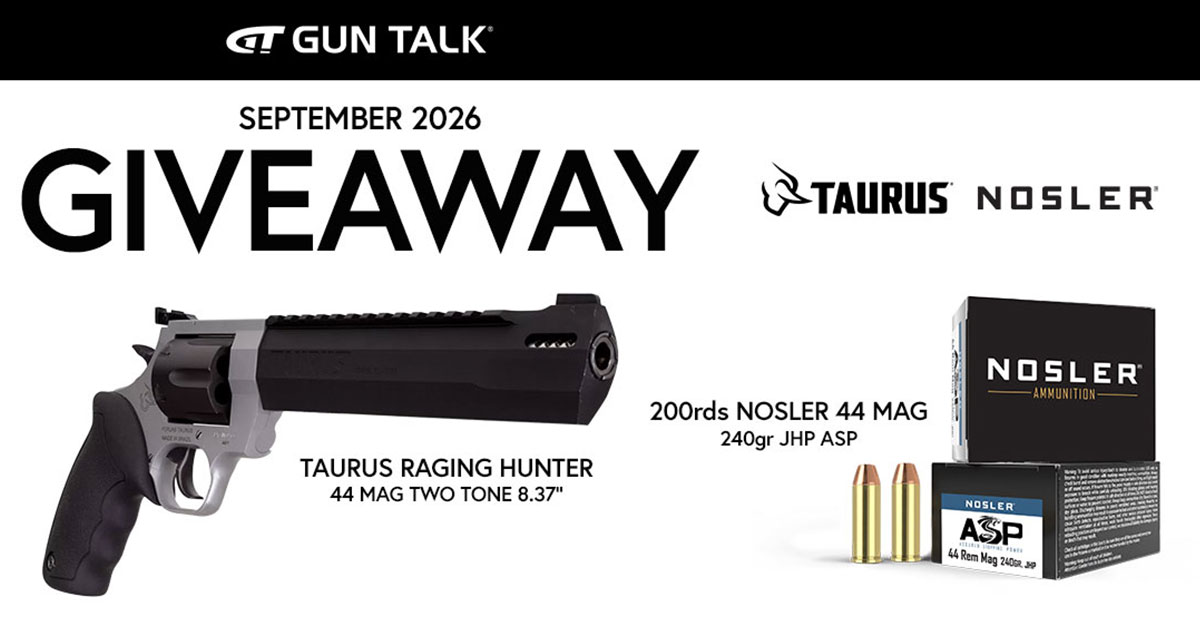
Gun Talk Giveaway
One lucky winner will bring home:
Open to U.S. residents 21+ only. Void where prohibited.