August 17, 2026
Gun Talk Staff
The term “short-barreled rifle” has a specific federal legal definition under 26 U.S.C. § 5845(a), and that definition matters because the legal category is what triggers NFA regulation, not any intuitive sense of what “short” means.
Under federal law, a short-barreled rifle is any rifle having a barrel or barrels of less than 16 inches in length, or a rifle with an overall length of less than 26 inches. A “rifle” for this purpose is any firearm designed or redesigned, made or remade, and intended to be fired from the shoulder, using the energy of an explosive to fire a single projectile through a rifled bore.
| Barrel length threshold | Less than 16 inches from the bolt face to the muzzle of the barrel |
|---|---|
| Overall length threshold | Less than 26 inches total, measured with stock fully extended |
| Must be a rifle | Designed to be fired from the shoulder │ Rifled bore │ Single projectile per trigger pull |
| How it becomes an SBR | Manufactured with a short barrel │ Converted from a pistol with a stock │ Pistol + stock = SBR │ Rifle + short barrel = SBR |
| Key exclusions | Pistols (no shoulder stock) │ PCCs classified as pistols │ Braced pistols (distinct category) │ Non-shoulder-fired firearms |
| Federal statute | 26 U.S.C. § 5845(a) │ National Firearms Act |
The 16-inch barrel length threshold is not based on ballistics or any technical firearms standard. It was established in the original 1934 National Firearms Act as a political and administrative line intended to distinguish military-style short firearms from standard sporting rifles. The 18-inch shotgun threshold was similarly arbitrary. Both numbers have been federal law for 92 years regardless of whether they reflect any meaningful distinction in a firearm’s danger or utility.
Practically, the distinction between a 16-inch barrel and a 14.5-inch barrel in terminal ballistics is marginal for most calibers. The SBR category exists as a legal construct, not a technical one.
Under ATF rules as they currently stand after Cekada’s 34-rule reform package rescinded the pistol brace rule in early 2026, a firearm with a pistol brace rather than a rifle stock is classified as a pistol, not a rifle. That means it is not an SBR and is not subject to NFA registration requirements regardless of barrel length.
The practical result: a 10.5-inch AR-15 with a pistol brace is a pistol under federal law. The same 10.5-inch AR-15 with a rifle stock is an SBR. The barrel length is identical. The regulatory status is entirely different based on the shouldering device. This distinction is currently stable under the Cekada ATF but has historically been contested and could change with future administrations.
Part 2To understand where we are today, you need to understand where the NFA came from and why it survived for 92 years before a federal court challenged it successfully for the first time.
The NFA was enacted in June 1934, motivated by the Prohibition-era gang violence that had made Thompson submachine guns and sawed-off shotguns the visual symbols of organized crime in American popular culture. The legislative record shows that Congress was specifically targeting the gangster aesthetic — concealable, high-capacity, rapid-fire weapons associated with bootleggers and the St. Valentine’s Day Massacre.
The NFA achieved its regulatory goal by using Congress’s taxing power rather than a direct ban. The Supreme Court’s 1937 decision in United States v. Miller had already suggested limits on what the Second Amendment protected, and a direct ban would have faced constitutional uncertainty. A tax was cleaner: Congress could tax whatever it wanted, and a $200 tax in 1934 dollars (roughly $4,600 today) on a $10 gangster gun was effectively prohibitive. The registration requirement existed to enforce tax collection.
Suppressors, short-barreled rifles, short-barreled shotguns, machine guns, and destructive devices all came under the NFA’s framework. Every transfer required ATF approval and payment of the tax. Every manufactured item required registration. The federal registry — the National Firearms Registration and Transfer Record — was born.
The Gun Control Act of 1968 added the statutory framework that required all NFA items to transfer through licensed dealers, established the Form 4473 background check requirement, and codified the NFA transfer structure that remains largely in place today. The Hughes Amendment to the Firearm Owners Protection Act of 1986 closed the machine gun registry to new civilian registrations, creating the pre-1986 machine gun scarcity that drives the six-figure market for transferable machine guns today. Short-barreled rifles and suppressors were not similarly frozen — new ones could be registered.
The One Big Beautiful Bill Act, signed July 4, 2025 and effective January 1, 2026, reduced the making and transfer taxes on suppressors, SBRs, SBSs, and AOWs to zero dollars. Machine guns kept their $200 tax. The registration apparatus remained in place. On August 5, 2026, Judge James Wesley Hendrix of the Northern District of Texas ruled that the registration requirements, without a tax to enforce, exceeded Congress’s constitutional authority. The DOJ declined to appeal.
“Congress enacted NFA registration under its taxing power. With the tax at zero, the registration scheme collects nothing and can no longer be justified under any power Congress actually invoked.” — Judge James Wesley Hendrix, Silencer Shop Foundation v. ATF, August 5, 2026Part 3
The injunction in Silencer Shop Foundation v. ATF enjoins the ATF and DOJ from enforcing specific NFA registration and approval provisions against covered parties for SBRs, SBSs, suppressors, and AOWs. It does not eliminate the NFA. It does not create a nationwide exemption. It protects specific parties, and only those parties, from specific enforcement.
| GOA members | COVERED. Form 4 registration enjoined. Standard 4473 + NICS required at dealer. Verify active membership at gunowners.org before relying on coverage. |
|---|---|
| GOA Foundation members | COVERED. Same as GOA members. |
| Silencer Shop customers | COVERED for suppressors and AOWs. For SBRs, coverage tracks GOA membership and other plaintiff-org membership, not Silencer Shop customer status alone. Verify at ssf.org. |
| PSA / SilencerCo / B&T / Hot Shots customers | COVERED for items purchased through those dealers. Verify at each dealer’s website for current SBR transfer process. |
| 15 plaintiff states’ agencies | COVERED. Individual residents of these states are NOT covered by virtue of residency alone. |
| Everyone else | NOT COVERED. Form 4 and full NFA registration process remain in effect. Acting without confirmed coverage is a federal felony. |
| 60-day appeal window | DOJ has confirmed it will not appeal. Formal window closes early October 2026. The injunction is operative and the commitment is public record. |
| Fifth Circuit / SCOTUS | Could still issue orders affecting the injunction if a third party petitions for emergency relief, though no such petition has been filed as of August 17. |
This is the section that prevents federal felonies. These requirements have not changed and apply to every single SBR transaction regardless of covered-party status:
State laws on SBRs vary significantly and the federal injunction changes none of them. Before you act, verify your state:
| SBRs fully legal (no state restrictions) | Most states. If your state is not in the categories below, SBRs are legal under state law subject to federal compliance. |
|---|---|
| SBRs banned or severely restricted | California, Hawaii, Illinois (certain localities), Maryland, Massachusetts, New Jersey, New York, Rhode Island, Washington D.C. Verify current status with a licensed attorney in your state. |
| Constitutional carry states (relevant for transport) | 29 states allow permitless carry. SBR transport rules vary by state regardless of carry permit status. Check state laws for long gun transport requirements. |
| AOW/SBS rules differ from SBR rules in some states | Some states treat SBRs, SBSs, and AOWs differently. Verify each category separately if relevant to your situation. |
There are three legal paths to owning an SBR: buy a complete factory SBR, build one on a Form 1 (make), or configure an existing platform as an SBR. Each has different implications for covered vs. non-covered parties under the current injunction.
The most straightforward path. A manufacturer produces an SBR (barrel under 16 inches, stock-equipped, fired from the shoulder), you select it, and your FFL dealer processes the transfer.
For COVERED parties: The Form 4 transfer tax and registration are enjoined. The process at the dealer is a standard 4473 + NICS check, same as buying any rifle. The dealer must be willing to process a covered transfer; not all dealers have updated their procedures yet. Contact the dealer in advance.
For NON-COVERED parties: The full NFA process applies. Form 4 submitted by your dealer, wait for ATF approval, then take possession. With the $200 tax at $0, the cost barrier is gone but the wait time and approval process remain for non-covered parties. Current ATF Form 4 processing times for non-covered parties: check atf.gov for current wait times.
A Form 1 is the “Application to Make and Register” under the NFA. It allows an individual to manufacture an NFA item for personal use. Prior to the ruling, this was the standard path for building your own SBR from a pistol or from a stripped lower receiver.
For COVERED parties: ATF Director Cekada stated explicitly in August 2026 that no one will be charged for complying with a Form 1 as long as he is running the ATF — and for covered parties, the registration requirement itself may be enjoined. The practical guidance for covered parties building an SBR: file a Form 1 anyway as a belt-and-suspenders measure, wait for approval, then build. The Form 1 process costs $0 (tax eliminated January 1, 2026) and provides documented legal compliance regardless of how the injunction landscape evolves.
For NON-COVERED parties: The Form 1 process remains the only legal path to building your own SBR. File through ATF eForms at eforms.atf.gov. Cost: $0. Process: submit identity documents, wait for approval, receive your approved Form 1, then and only then begin the build. Do not install the short barrel or shoulder stock before the Form 1 is approved.
The most customizable path. You start with either an existing pistol (that you convert to an SBR by adding a rifle stock) or a stripped lower receiver (that you build into an SBR). Both require a Form 1 for non-covered parties before any SBR configuration is installed.
The stripped lower receiver path is popular because a stripped AR lower is not classified as a pistol or a rifle under federal law — it is an “other” firearm. You can purchase a stripped lower through a standard dealer transfer, then file a Form 1 to make it into an SBR, and build from there with full control over every component.
If you own a pistol — an AR-15 pistol, an AK pistol, or any other pistol configuration — adding a rifle stock to it converts it to an SBR and requires NFA compliance. You must file and receive an approved Form 1 before installing the stock for non-covered parties. For covered parties, the Form 1 registration may be enjoined, but the practical advice remains: file anyway as legal protection.
Purchase a stripped lower receiver through your FFL as an “other” firearm. File a Form 1 designating it as an SBR build (for non-covered parties). Upon approval, engrave as required, then build with your chosen upper, barrel, stock, and components. This path gives you complete control over the final configuration and is the preferred path for most serious SBR builders.
Part 5Whether you’re buying factory or building, the SBR market in 2026 has genuinely excellent options at every price point. Here are the platforms Gun Talk Media recommends, organized by use case.
The gold standard in compact SBR/braced configurations. 7-inch .300 BLK barrel folds to 20.75 inches total. Runs supersonic or suppressed subsonic with equal reliability. DD quality and warranty. NFA tax at $0 changes the calculus significantly for covered parties.
The gas-piston design eliminates the cycling issues that plague DI ARs with very short barrels. The folding stock adds transport versatility. The .300 BLK Rattler in 5.5 inches is one of the most capable ultra-compact SBRs ever produced.
The Harrier’s mil-spec dimensions and threaded muzzle make it an excellent SBR platform base. Buy the Harrier rifle, file a Form 1, install your chosen SBR upper. The forged 7075 lower and mid-length gas system on the 28600 pair well with quality 10.3–14.5-inch uppers from BCM, Faxon, or Daniel Defense. Read our full Harrier review for the complete rifle breakdown before you build.
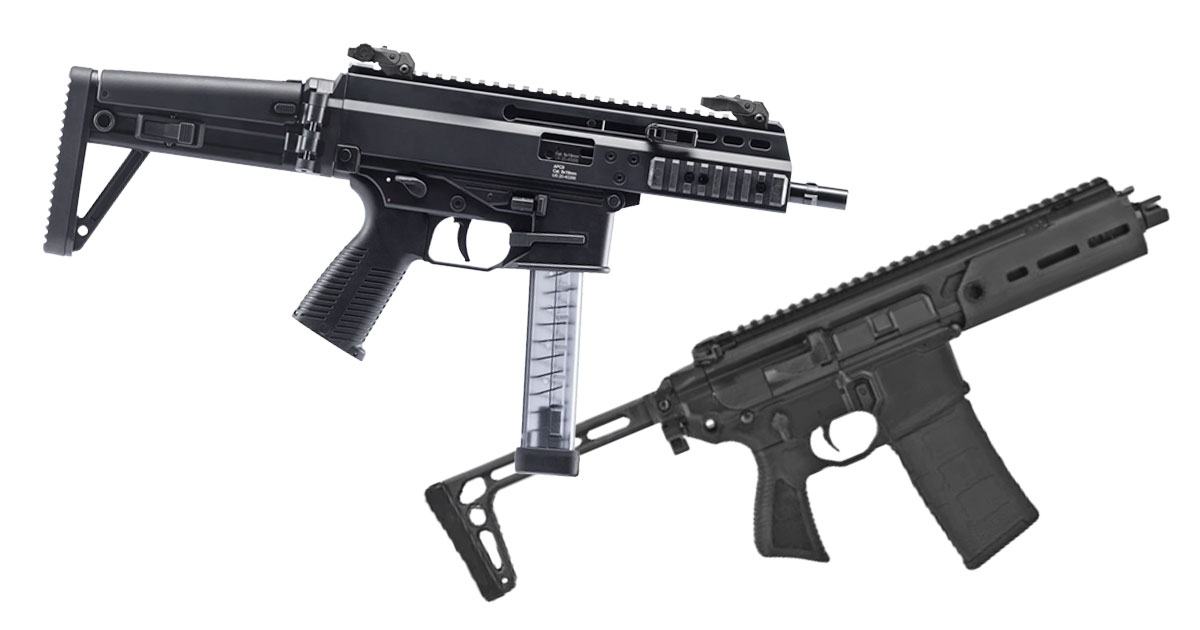
B&T is a named commercial plaintiff in Silencer Shop Foundation v. ATF, meaning their customers are covered by the injunction. The APC9 Pro is Swiss-made, purpose-built for suppressed use, GLOCK-magazine compatible, and one of the finest 9mm SBR platforms on the market. The covered-party coverage for B&T customers is direct and confirmed.
Palmetto State Armory is a named plaintiff in the case, meaning PSA customers are covered by the injunction. PSA offers some of the best value SBR options in the market, including AK-pattern and AR-pattern SBRs at prices that make the category accessible without breaking the budget.
| .300 Blackout | The purpose-built SBR caliber. Designed from the ground up for short barrels (7–10 inches). Runs supersonic for velocity or subsonic for suppressed use. Minimal velocity loss from short barrels vs. 5.56. THE choice for suppressed SBR builds. |
|---|---|
| 5.56 NATO / .223 | Works in SBRs (10–14.5" is the practical range) but loses significant velocity from short barrels. 10.3" is roughly the minimum practical 5.56 barrel length. Excellent choice for 12.5"–14.5" SBRs where some velocity loss is acceptable. |
| 9mm (PCC SBR) | The suppressor-friendly caliber that needs no velocity to be effective. A 9mm SBR with a 6–8" barrel is hearing-safe with subsonic ammo and a suppressor. Best for: B&T APC9, Sig MPX, CZ Scorpion SBR builds. |
| 7.62x39 | Short barrels work well. AK-platform SBRs in 7.62x39 are proven short-barrel performers — the caliber was designed for military carbines. Good choice for AK-pattern SBR builds. |
| 6.5 Grendel / 6mm ARC | Higher-BC calibers that maintain velocity better from intermediate barrel lengths. Not ideal for very short (under 10") barrels, but excellent for 12"–14.5" SBRs that need extended range. |
| .45 ACP / 10mm (PCC SBR) | Large pistol calibers in SBR configurations. Heavy, subsonic by nature, excellent suppressor hosts. .45 ACP and 10mm SBR PCCs are niche but growing post-NFA-reform. |
If you’re building on a Form 1, these are the component sources Gun Talk Media recommends for a quality SBR build at various price points:
Whether you file a Form 1 or rely on the injunction as a covered party, if you manufacture an SBR (convert a pistol or build on a lower receiver), federal law requires that the firearm be engraved with your name (or the name of the trust/entity), city, and state. This is required under 27 C.F.R. § 478.92 and ATF’s marking requirements.
Transporting an SBR across state lines has specific requirements that apply regardless of covered-party status under the injunction:
The current situation — injunction operative, DOJ not appealing, covered parties transacting without Form 4 — is the most significant change to SBR regulation since 1934. But it is not the final word.
The formal window for the DOJ to file a notice of appeal runs 60 days from the August 5 judgment, closing in early October 2026. The administration has publicly committed not to appeal, and Rep. Clyde has confirmed that commitment. Until the window formally closes or the DOJ files an explicit waiver, the commitment rests on the administration’s word. Watch for a formal waiver filing or for the window to close without a notice of appeal.
Rep. Andrew Clyde, Sen. Steve Daines, and 47 congressional colleagues have urged the DOJ to apply the ruling as its nationwide operating position through administrative rulemaking — effectively extending the injunction’s protection to all Americans regardless of covered-party status. If the administration follows through with formal rulemaking, the covered/non-covered party distinction disappears. That rulemaking has not been initiated as of August 17.
Two parallel cases in the Eastern District of Missouri (Brown v. ATF) and the Eastern District of Kentucky (Roberts v. ATF) raise the same constitutional theory as Silencer Shop Foundation v. ATF. If those courts rule the same way, coverage expands into the Sixth and Eighth Circuits. If they rule differently, it creates circuit splits that could force Supreme Court review.
The cleanest legislative resolution would be an act of Congress removing SBRs, SBSs, suppressors, and AOWs from the NFA entirely — or amending the NFA to reflect the constitutional reality that registration without a tax lacks enumerated-powers support. Several such bills have been introduced; none has passed as of August 17. Watch the SHARE Act and similar legislation.
END OF ARTICLE — NOT LEGAL ADVICE — VERIFY COVERED-PARTY STATUS AND STATE LAW BEFORE ACTING — NFA VIOLATIONS CARRY UP TO 10 YEARS FEDERAL IMPRISONMENT
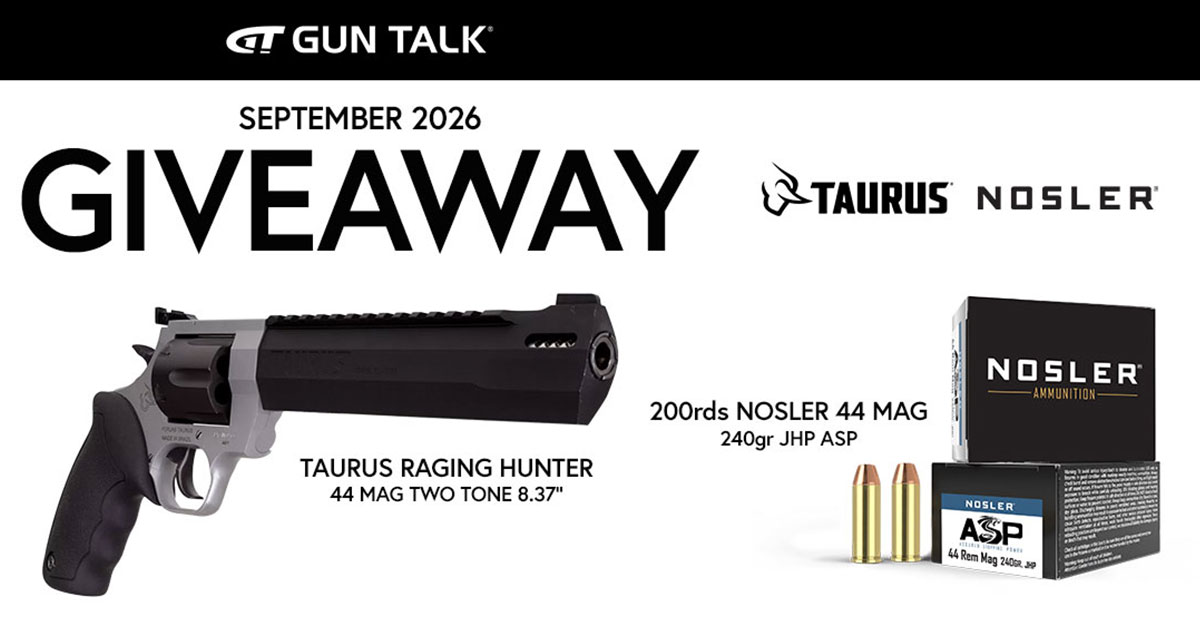
Gun Talk Giveaway
One lucky winner will bring home:
Open to U.S. residents 21+ only. Void where prohibited.