October 2, 2026
Gun Talk Staff
Gun Talk Media Staff — October 1, 2026
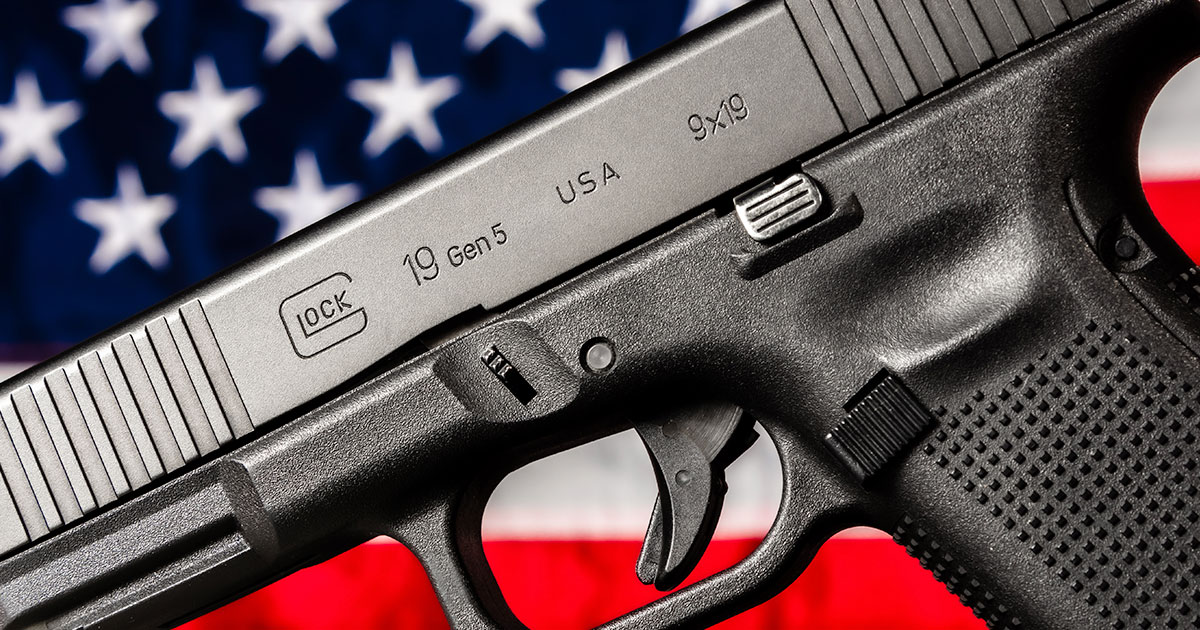
Connecticut Governor Ned Lamont signed House Bill 5043 on May 26, 2026, making Connecticut the second state after Maryland to ban so-called “convertible pistols” — a statutory category defined broadly enough to cover every standard Glock pistol ever manufactured. The law, designated Public Act 26-41, was scheduled to take effect October 1, 2026. Selling a covered pistol manufactured after that date was to become a Class D felony punishable by up to five years in prison.
It didn't get that far. On September 30, 2026 — one day before the clock turned — U.S. District Judge Kari A. Dooley granted a preliminary injunction blocking enforcement of HB5043, finding that the plaintiffs — Glock Inc., the National Shooting Sports Foundation, Shadow Systems, and Blue Trail Range — have demonstrated that the Second Amendment's text is implicated by the ban, which shifts the burden to Connecticut to justify the law under the Bruen text-and-history framework. Connecticut has not yet done that to the court's satisfaction.
This is the important distinction to understand: a preliminary injunction is not a temporary pause awaiting a later hearing. It's the ruling that follows that hearing. The plaintiffs already cleared the bar — likelihood of success on the merits, irreparable harm, balance of hardships, and the public interest — and the injunction stays in place for as long as the underlying case is litigated, unless a higher court steps in. Connecticut is expected to appeal to the Second Circuit Court of Appeals and could seek a stay pending that appeal. Barring that, the ban stays blocked. Here is the full context.
“Connecticut conceded this law implicates the text of the Second Amendment and it is therefore presumptively unconstitutional. This is the correct decision to put a hold on this law while the Court can hear arguments exposing the constitutional flaws that grossly trample on the fundamental rights of law-abiding citizens.” — Lawrence G. Keane, NSSF Senior VP & General Counsel, October 1, 2026
Connecticut's Public Act 26-41 creates a new statutory category: the ‘convertible pistol.’ The law defines a convertible pistol as any semiautomatic pistol with a cruciform trigger bar that can be readily converted into a machine gun solely by the installation or attachment of a pistol converter — i.e., an illegal Glock switch device — whether or not there is a notch at the rear of the pistol frame.
The cruciform trigger bar is the hallmark of Glock's design and is used by most major striker-fired handgun manufacturers. The statute's definition covers every standard Glock model — from the G43X subcompact to the G17 full-size. It also covers competing striker-fired designs from Shadow Systems, and potentially other manufacturers whose designs share the cruciform trigger bar geometry. Hammer-fired pistols and striker-fired pistols with a shielded trigger bar are specifically exempted from the definition.
The law makes it a Class D felony — up to five years in prison and a $5,000 fine — to sell, import, distribute, or advertise a convertible pistol manufactured after October 1, 2026, in Connecticut. Notably, the law provides no exemption for sales to law enforcement officers or agencies. If the law had taken effect as written, Connecticut police departments could not purchase new Glock pistols manufactured after today — a point the plaintiffs specifically raised in arguing for an injunction.
HB5043 was introduced as a Governor's Bill by the Lamont administration in February 2026. The NRA-ILA immediately characterized it as ‘on shaky constitutional footing’ and noted that it would make possession of ‘an entire class of commonly-owned firearms’ a felony. The House passed the bill 86-64 on April 22, 2026. The Senate passed it in an overnight vote shortly after. Governor Lamont signed it May 26, 2026.
The law targets the phenomenon of ‘Glock switches’ — illegal machine gun conversion devices that have been recovered by law enforcement from crime scenes in Connecticut and across the country. The legislative argument is that because a Glock can be illegally converted by a criminal using one of these devices, the sale of the pistol itself should be regulated as a ‘convertible pistol.’ The constitutional argument against that logic is that the same reasoning could justify banning any firearm that can be illegally modified — which is virtually all of them — and that penalizing the law-abiding buyer for the criminal's illegal modification has no historical analog in the Founding era. That argument is exactly what persuaded Judge Dooley.
Glock filed its own complaint — Glock, Inc. v. Griffin, case 3:26-cv-01525 — on September 21, 2026, after the company sought written guidance from Connecticut officials on whether its Slimline, V Series, and Gen 6 pistols fall within the convertible pistol definition, and state officials refused to provide that guidance. Without clarity on whether its own products are legal to sell in Connecticut, Glock faced an impossible choice: halt all sales and risk losing its Connecticut market, or continue sales and risk its dealers facing felony prosecution. The complaint argues the law is void for vagueness — a separate constitutional ground from the Second Amendment challenge — because neither Glock nor its dealers can determine from the statute's text whether their products are covered.
The Glock complaint also notes a remarkable feature of the law: it would reach even law enforcement. Connecticut's statutory definition contains no law enforcement exemption. A Connecticut police department that orders new Glocks manufactured after October 1 would be receiving ‘convertible pistols’ under the statute. That anomaly strengthened the injunction argument that the law as written is constitutionally indefensible.
NSSF — headquartered in Newtown, Connecticut, making this a particularly direct fight for the organization — filed its own suit, NSSF, Inc. v. Griffin, case 3:26-cv-01528, naming Chief State's Attorney Patrick Griffin as defendant in both cases. Shadow Systems, a Texas-based manufacturer of Glock-compatible pistols whose designs also use cruciform trigger bars, faces the same sales ban as Glock and joined the litigation. Blue Trail Range, a Connecticut firearms retailer, faces direct felony exposure under the law for any sales it would have made of covered pistols after today.
NSSF's statement after the injunction was granted cited the Bruen framework directly: Connecticut conceded in court that the law implicates the Second Amendment's text, which under Bruen means the law is presumptively unconstitutional. The burden has shifted to Connecticut to produce a historical tradition of analogous regulation. NSSF's position is that no such tradition exists because no historical regulation banned an entire class of commonly owned defensive firearms on the theory that criminals might illegally modify them.
Judge Dooley's preliminary injunction rests on the standard four-factor test: likelihood of success on the merits, irreparable harm, balance of hardships, and the public interest. The Second Amendment finding is the most legally significant:
The preliminary injunction means Connecticut gun dealers can continue selling Glock pistols and other covered striker-fired handguns while it remains in effect. Because this is a preliminary injunction rather than a TRO, it isn't waiting on a future hearing to be reconsidered — the next move belongs to Connecticut on appeal, not to a hearing already won by the plaintiffs.
Connecticut's HB5043 is not the only state-level Glock ban in active litigation — and the other one just went the opposite way. Maryland's SB 334, the Bathras v. Moore case Gun Talk Media covered in August, similarly targets pistols with cruciform trigger bars and carries a January 1, 2027 enforcement date. On September 25, 2026 — five days before Judge Dooley's ruling in Connecticut — U.S. District Judge Richard D. Bennett denied the plaintiffs' motion for a preliminary injunction in the Maryland case, keeping SB 334 on track to take effect as scheduled. Maryland's Attorney General Anthony Brown praised the ruling; Connecticut's injunction five days later cut the opposite direction on nearly identical facts.
Both cases will be influenced by Viramontes v. Cook County, the consolidated SCOTUS case on AR-15 platform rifles scheduled for oral argument December 2, 2026. The central question in Viramontes is whether the government can ban an entire class of commonly owned firearms under the Second Amendment. The answer the Court gives will directly affect how lower courts evaluate Connecticut's ‘convertible pistol’ theory and Maryland's similar ban — including whichever of the two rulings above gets appealed first. If SCOTUS holds that commonly owned firearms are constitutionally protected, both the Connecticut and Maryland Glock bans become extraordinarily difficult to defend under Bruen. If SCOTUS narrows that holding or creates exceptions, the state-level Glock bans may find more room to survive.
The English survey data Gun Talk Media covered September 11 — which found 88 million American gun owners, 461 million total firearms, and approximately 40 million AR-15 type rifles in private hands — provides the evidentiary foundation for the ‘commonly owned’ argument across all these cases. Glock pistols are the most popular handgun in the United States. A ban on Glock sales is a ban on the most commonly owned defensive handgun in the country. That is the constitutional argument in one sentence.
| Law | Connecticut Public Act 26-41 (HB5043) │ Signed by Gov. Lamont May 26, 2026 │ Effective October 1, 2026 |
|---|---|
| What it bans | Sale, import, distribution, or advertising of any semiautomatic pistol with a cruciform trigger bar manufactured after October 1, 2026 │ Class D felony: up to 5 years, $5,000 fine |
| Pistols covered | Every standard Glock (G17, G19, G43X, G45 Gen 6, and all other standard models) │ Shadow Systems │ Other striker-fired pistols with cruciform trigger bars |
| Exemptions | Hammer-fired pistols │ Striker-fired pistols with shielded trigger bars │ NO law enforcement exemption in the statute as written |
| Existing owners | Lawfully owned covered pistols acquired BEFORE October 1, 2026 are protected — possession is not banned |
| Cases | Glock, Inc. v. Griffin, 3:26-cv-01525 │ NSSF, Inc. v. Griffin, 3:26-cv-01528 │ D. Conn. │ Defendant: CT Chief State's Attorney Patrick Griffin |
| Ruling | Preliminary injunction GRANTED September 30, 2026 │ U.S. District Judge Kari A. Dooley │ Enforcement blocked for the duration of the litigation unless reversed on appeal |
| Plaintiffs | Glock Inc. (complaint filed Sept. 21) │ National Shooting Sports Foundation │ Shadow Systems │ Blue Trail Range |
| Constitutional basis | Second Amendment │ Bruen text-and-history framework │ Void for vagueness (Glock complaint) |
| CT historical arguments | Proving laws (rejected: designed for safety inspection, not categorical bans) │ Fully automatic weapon restrictions (rejected: insufficient analogy) |
| Next step | Connecticut expected to appeal to the Second Circuit Court of Appeals and/or seek a stay │ If the injunction stands: ban remains blocked through full litigation │ If reversed or stayed on appeal: enforcement could resume |
| Related cases | Maryland SB 334 / Bathras v. Moore — preliminary injunction DENIED Sept. 25, 2026 by Judge Richard D. Bennett; ban on track for Jan. 1, 2027 │ Viramontes v. Cook County (Dec. 2, 2026 SCOTUS oral argument) |
| NSSF HQ location | Newtown, Connecticut — NSSF is a direct local stakeholder in this litigation |
Connecticut's attempt to make selling a Glock a felony was stopped by a federal judge the day before enforcement was set to begin — and stopped with a preliminary injunction, not a placeholder. Judge Dooley found that Connecticut has no historical tradition of banning commonly owned firearms on the theory that criminals might illegally modify them, and that finding now governs the case unless a higher court disturbs it. The ban stays blocked through the full litigation on the merits unless Connecticut succeeds in getting the injunction stayed or reversed on appeal.
The legal theory at stake is the same one that will be argued before SCOTUS on December 2 in Viramontes — and the same one that just lost in Maryland five days before it won in Connecticut. If the Supreme Court holds that commonly owned firearms cannot be categorically banned under the Second Amendment, Connecticut's ‘convertible pistol’ law stays blocked and Maryland's SB 334 becomes very hard to defend. If SCOTUS narrows that holding or creates exceptions, both state bans may find more room to survive, and Connecticut's path through the Second Circuit becomes the one to watch.
Gun Talk Media will cover Connecticut's appeal and every subsequent development in this case as it moves through the courts. NSSF, Glock, SAF, FPC, and NRA-ILA are all tracking this litigation closely. This is a story that will run through the December 2 Viramontes argument and into 2027.


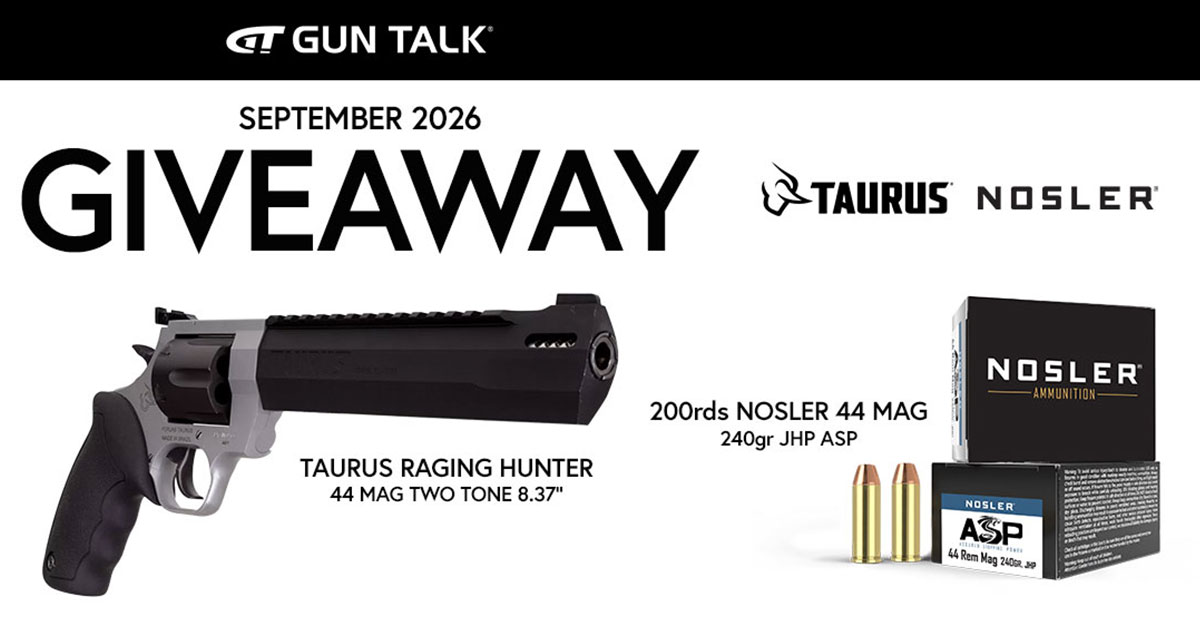
Gun Talk Giveaway
One lucky winner will bring home:
Open to U.S. residents 21+ only. Void where prohibited.