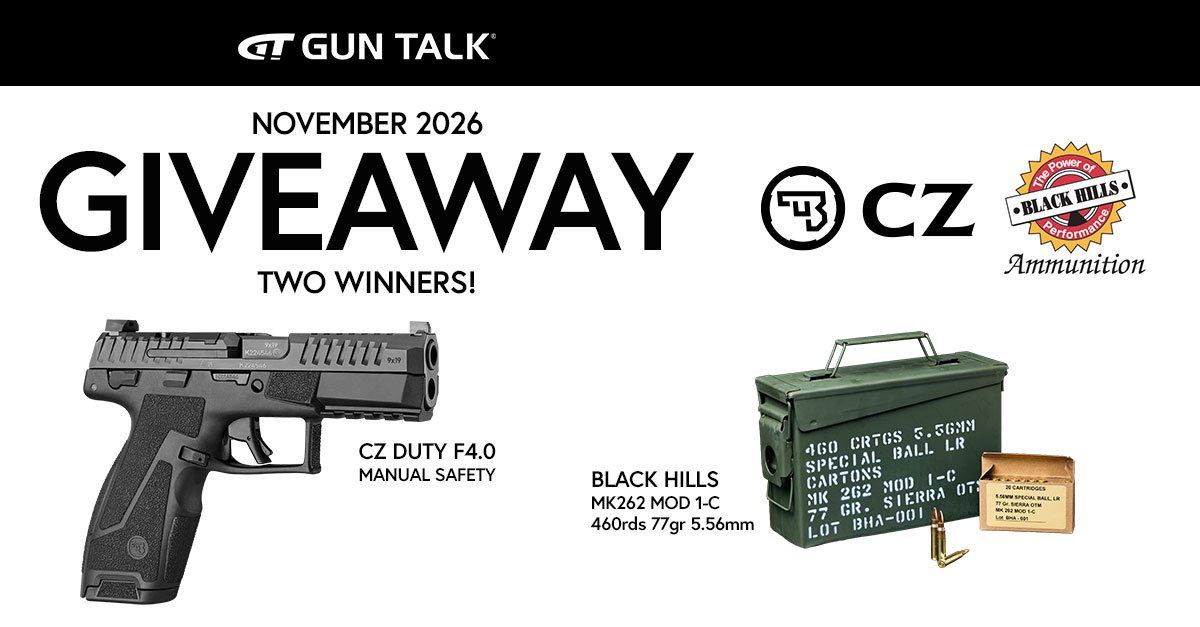
Gun Talk November Giveaway
Two winners this month.
- CZ Duty F4.0Manual safety
- Black Hills MK262 MOD 1-C460 rounds, 77gr 5.56mm
Two winners. Must be 21+ to enter. Void where restricted.
Gun Talk November Giveaway
Two winners. Must be 21+ to enter. Void where restricted.
November 16, 2026
Gun Talk Staff
Gun Talk Media Staff — November 16, 2026
Three docket entries matter. On November 9, the Court granted the Solicitor General's motion to participate in the oral argument as amicus curiae, supporting the challengers, and for divided argument. The docket doesn't say how the hour will be split, so how much time the challengers keep for themselves isn't yet known.
The second matter is the mootness fight. Cutberto Viramontes asked on October 29 to be dismissed from the case, and Cook County followed on November 5 with a suggestion of mootness, arguing that the remaining Cook County petitioners lack standing. Petitioners answered on November 11, and the Second Amendment Foundation has publicly argued the case should continue. Cook County replied on November 13. That completes the exchange, and the Court has not ruled on either request.
Why it matters: Grant v. Higgins, the Connecticut case, is consolidated with Viramontes. If the Court dismissed the Cook County case, the AR-15 question could still be decided through Connecticut's law. Expect an order at any time before argument.
The Court agreed on June 30 to decide whether the Second and Fourteenth Amendments protect the right to possess AR-15 platform and similar semiautomatic rifles. Under Bruen (2022), a challenged law must fit the nation's historical tradition of firearm regulation once the amendment's text covers the conduct, and Heller (2008) said protected arms are those in “common use” and not “dangerous and unusual.” The lower courts upheld both laws: the Seventh Circuit in Viramontes, and the Second Circuit in Grant.
“The Second Amendment is not a second-class right. The Court has said so. December 2 is the day we find out if they meant it for the most commonly owned rifle in America.” — Gun Talk Media
The defending governments say AR-15 style rifles are military-style weapons whose features make them especially dangerous, and that the Second Amendment does not protect them. That reasoning persuaded the lower courts, and it will be the main thing the justices test at argument.
Solicitor General D. John Sauer filed the United States' amicus brief in September supporting the challengers in both cases. It argues the AR-15 is an “Arm” within the amendment's text and that the nation's tradition does not allow banning arms in common use among law-abiding citizens. With the Court now allowing the government to take part in the argument, the Solicitor General will speak directly to the justices.
About 45 amicus briefs supported the petitioners, including one from 27 state attorneys general led by Tennessee. Respondent-side briefs followed on October 28, including two that urge the Court to revisit Heller. The Court's treatment of those arguments is another thing to listen for.
| Matter | Status |
|---|---|
| Cook County, Illinois | Before the Court in Viramontes; mootness and dismissal requests pending |
| Connecticut | Before the Court in Grant; consolidated with Viramontes |
| New Jersey | The en banc Third Circuit struck the state's assault weapons ban and 10-round magazine limit 10-5 on July 17. The state has asked the Supreme Court to hold its petition for Viramontes and Grant |
| Virginia | A state-court injunction blocking the state's new assault-weapons law took effect July 21 and runs until the Supreme Court rules in these cases |
If the Court sides with the challengers, the reasoning would bear on similar laws across the country and could set the standard for pending challenges, including magazine limits and other regulated items down the line. A ruling for the governments would be its first endorsement of an AR-15 ban in the Bruen era and could leave the states free to keep, or expand, their laws. A narrower decision, limited to the two laws at issue, is also possible.

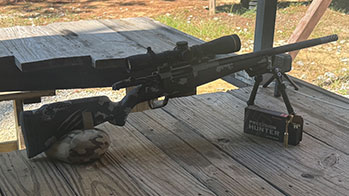


Gun Talk Giveaway
One lucky winner will bring home:
Open to U.S. residents 21+ only. Void where prohibited.